Where history meets opportunity. Strategically located adjacent to Atlanta and Hartsfield-Jackson International Airport — your gateway to growth.
Established
Established
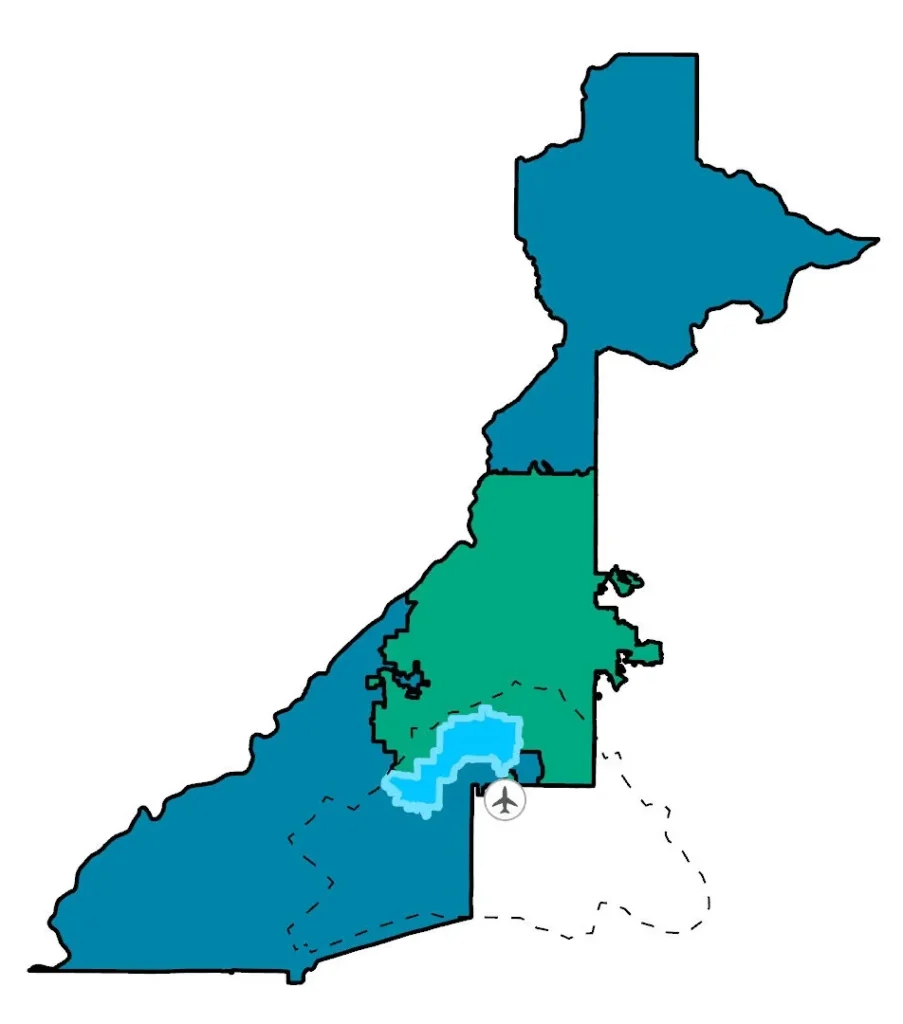
The City of East Point lies in southern Fulton County, directly adjacent to the City of Atlanta. It is also part of the ‘Tri-Cities’ area with the City of College Park and the City of Hapeville. Located directly north of Hartsfield-Jackson International Airport, it is also a key Aerotropolis community.
Officially chartered in 1887, the name “East Point” derives from the fact that this is the terminus of the Atlanta & West Point Railroad in the east; West Point Georgia, is the terminus where the rail line ends in the west. This settlement was founded as a railroad terminus with 16 families in 1870, but quickly became an inviting place for industry to develop.
Housing trends highlight both stability and opportunity. More than half of occupied housing units are renter households, and nearly 50% of homeowners hold property values between $300,000 and $399,999 — consistent with broader regional patterns. While southern Fulton County has experienced approximately 20% housing expansion since 2010, East Point has seen about 5% growth, indicating capacity for additional residential and mixed-use development. Continued investment in rooftops, retail, healthcare, and neighborhood-serving amenities can support long-term economic vitality and expand access to essential services for residents and businesses alike.
Empower East Point works with developers, businesses, and investors seeking to participate in thoughtful growth that strengthens economic opportunity while maintaining the community’s character and connectivity.
East Point, GA, offers a high quality of life with an, ethnically diverse, “live-work-play” environment. It provides a convenient, walkable, and vibrant suburban feel with, easy access to Hartsfield-Jackson Airport, downtown Atlanta, and amenities like the Camp Creek Marketplace. Key details regarding the quality of life in East Point include:
Known for a close-knit, diverse, and arts-focused community, featuring attractions like the ArtsXchange, the Windmill Arts Center, and proximity to Tyler Perry Studios.
Offers over 25 unique neighborhoods with a mix of historic, affordable, and rapidly developing options.
Features excellent MARTA rail access (East Point Station) and is located inside the perimeter (ITP), providing short commutes to major Atlanta hubs.
Home to a historic downtown area, a thriving local food scene, and ongoing improvements to infrastructure like the East Point Path.

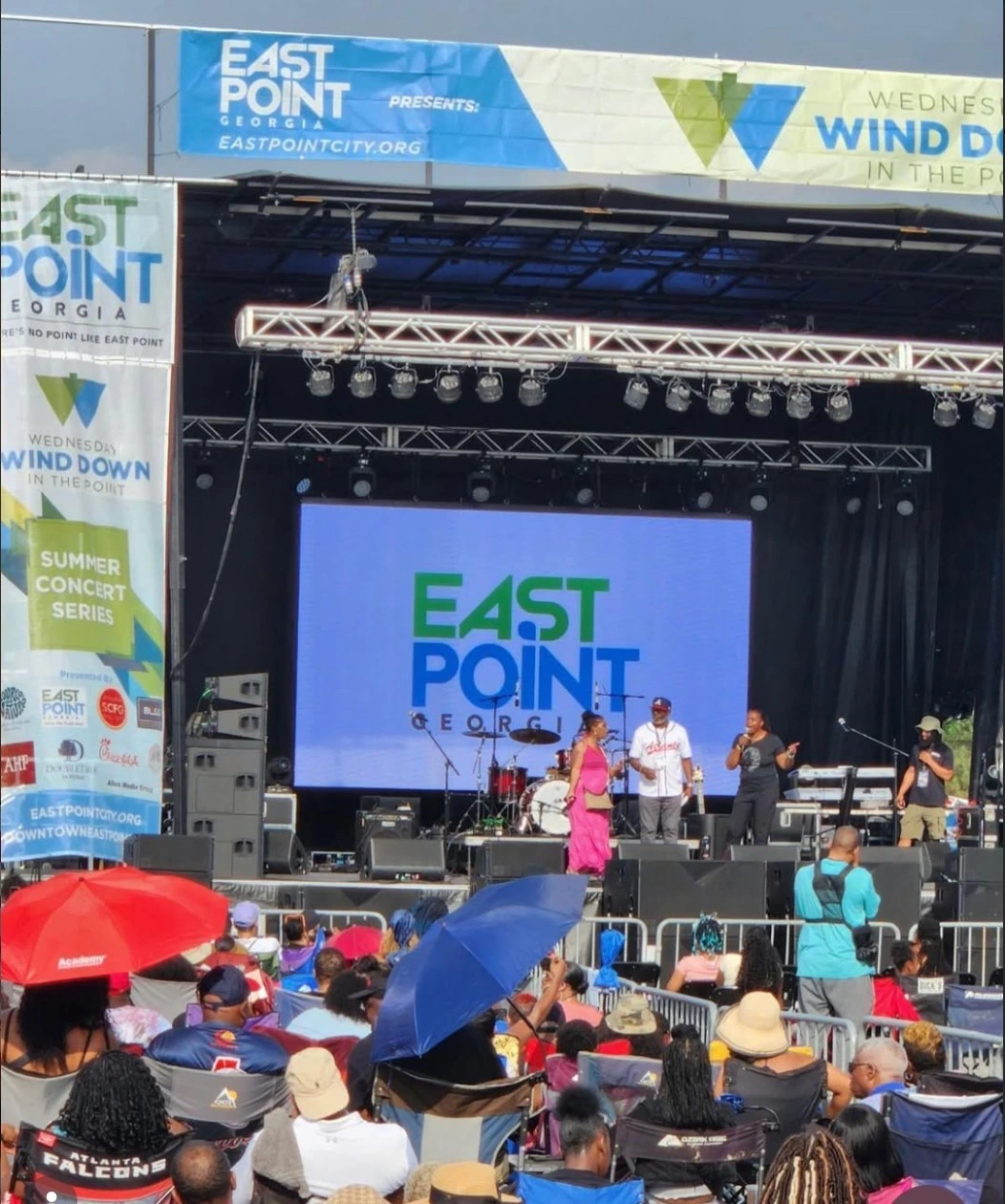
A lively summer concert series featuring local and regional artists, bringing the community together for evenings of music, food, and fun.

A seasonal open-air market offering fresh produce, local goods, and artisan products while supporting regional farmers and small businesses.
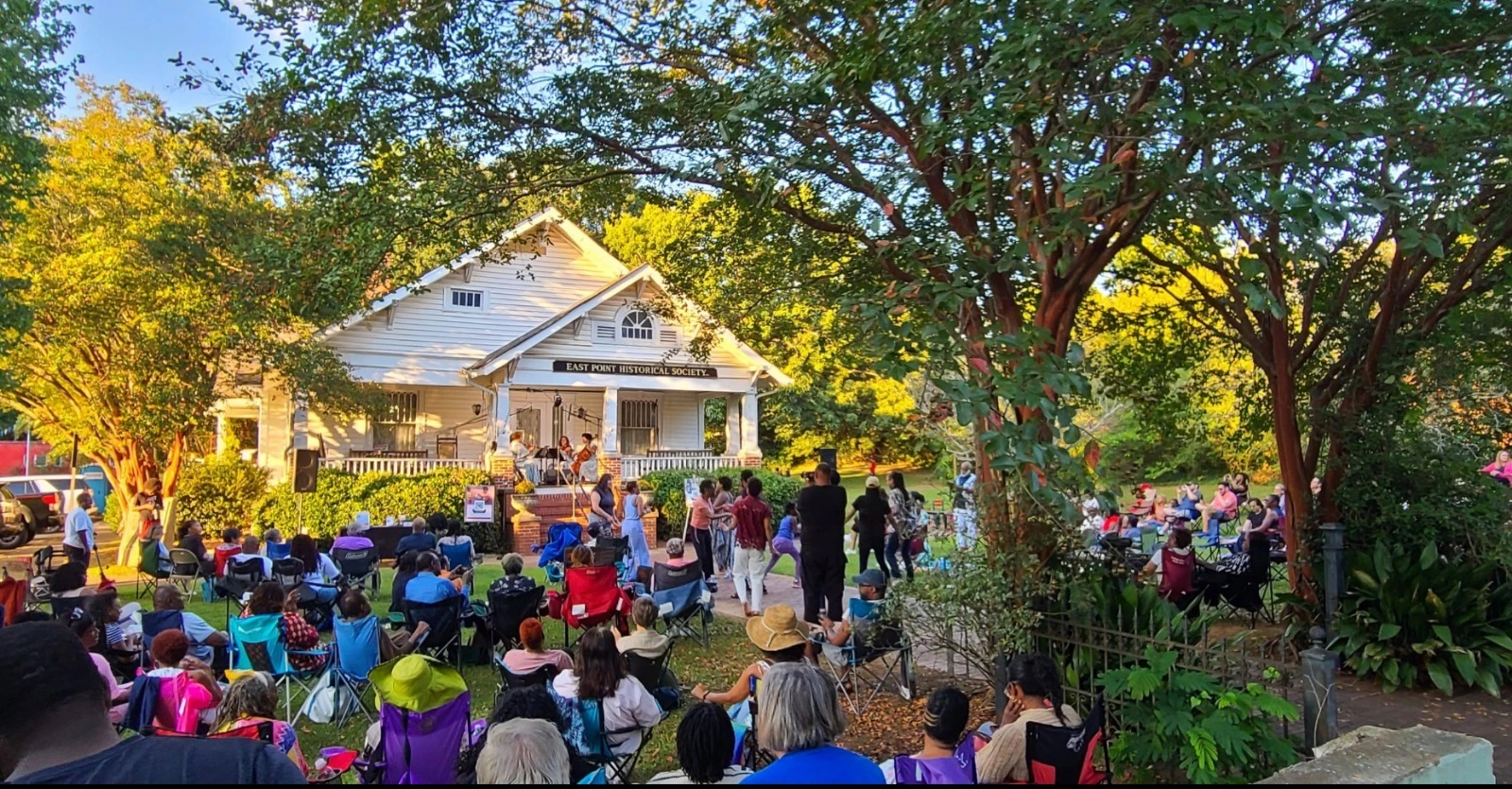
East Point Historical Society preserves and brings to life East Point's rich heritage by sharing the stories, people, and places that shaped the city from its railroad roots to today. And, please change the title to East Point Historical Society.
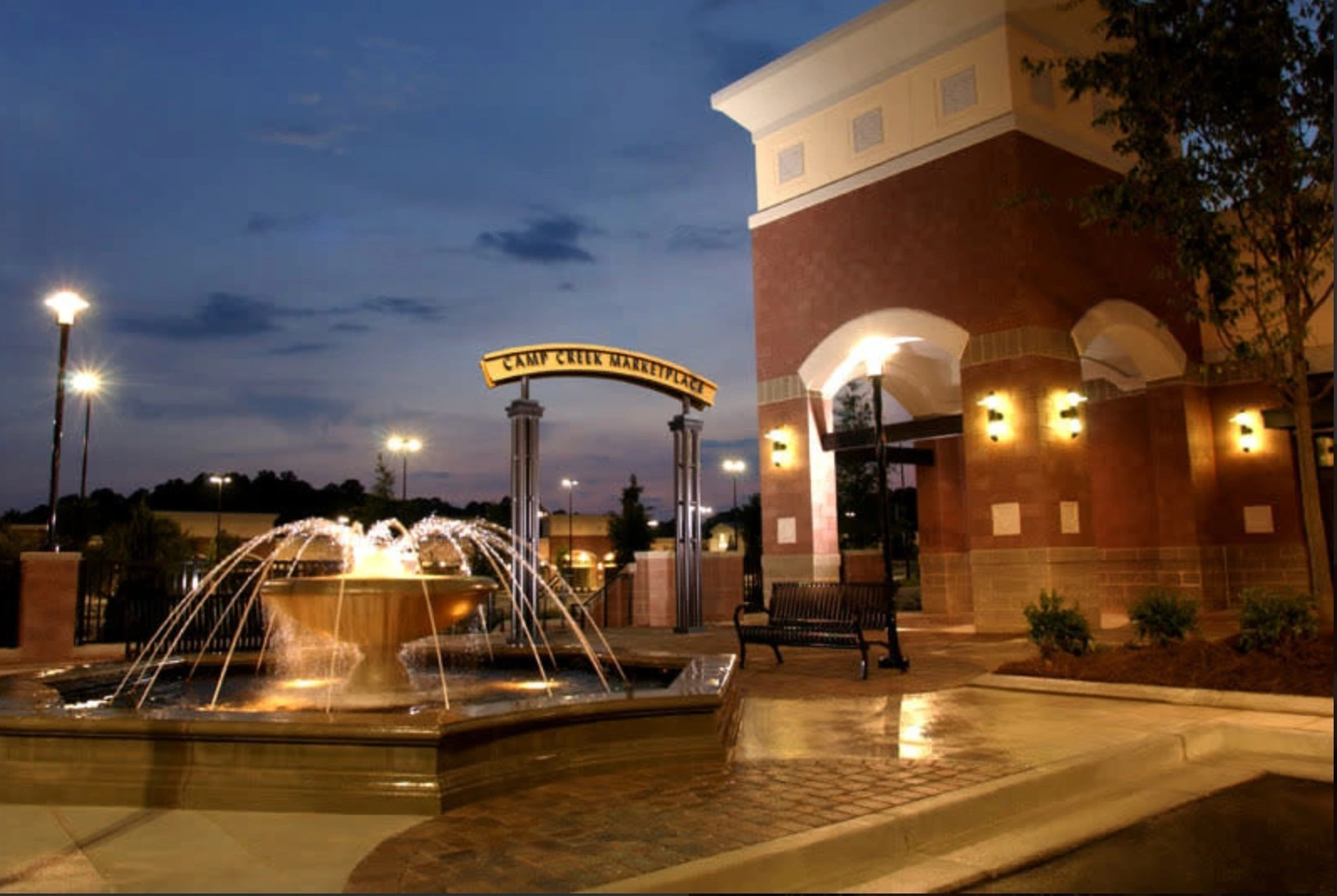
A premier retail and dining destination offering national brands, restaurants, and convenient shopping just minutes from the airport.
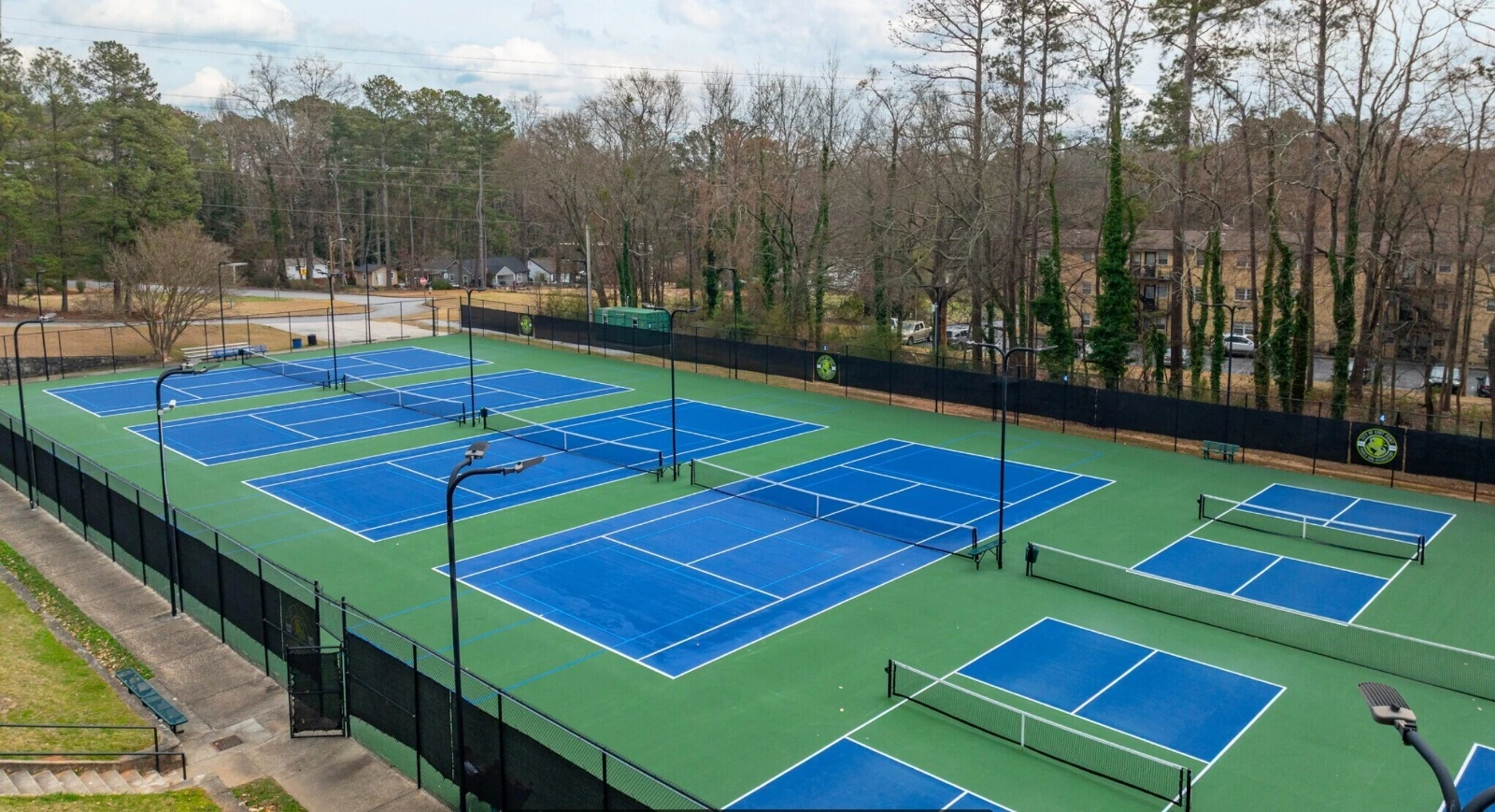
A popular community park featuring active pickleball courts and recreational amenities for residents of all ages.
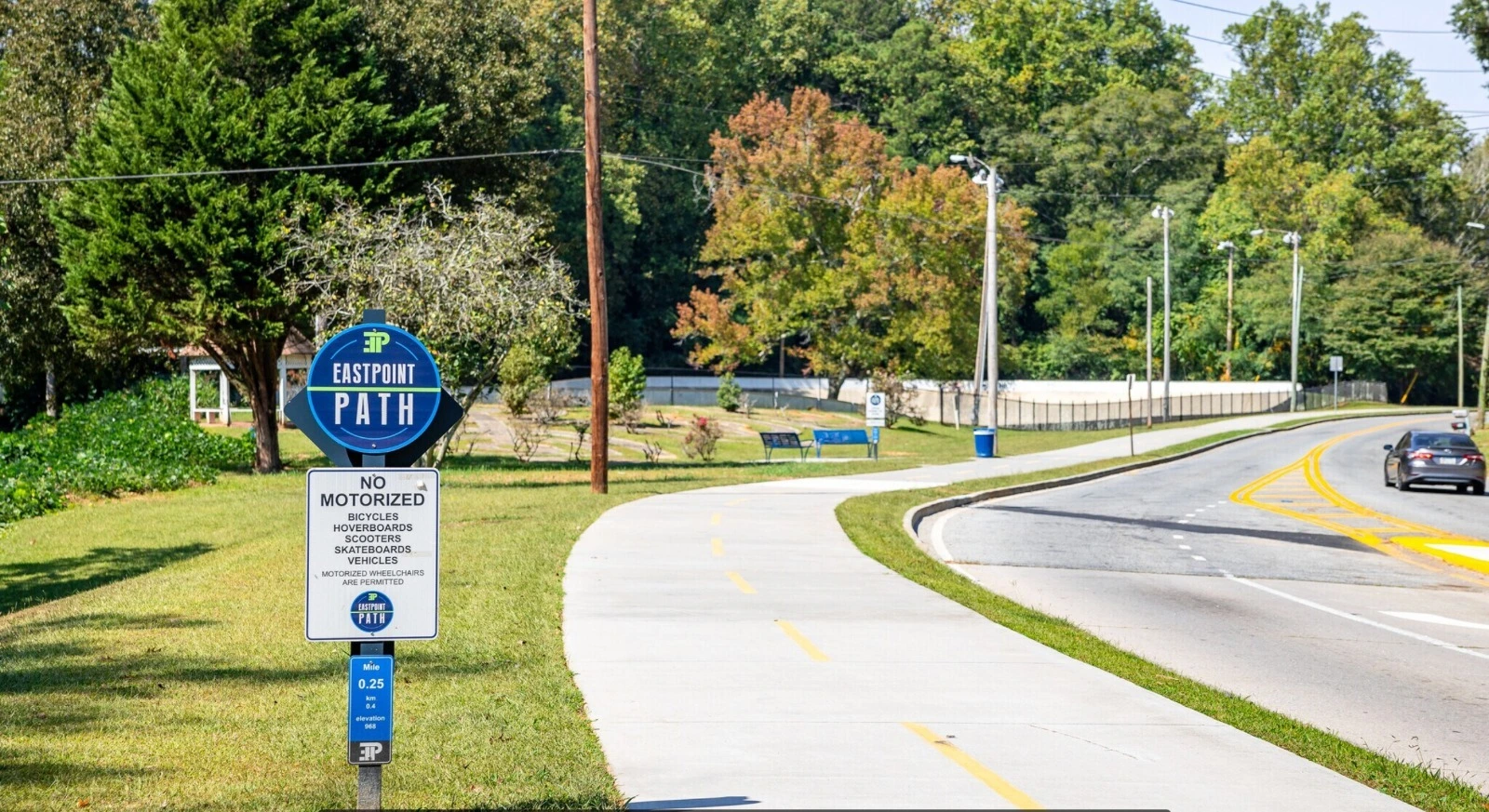
A growing multi-use trail system that connects neighborhoods, promotes walkability, and encourages outdoor activity.

One of the nation’s oldest continuously operating velodromes, hosting competitive cycling events and training programs.
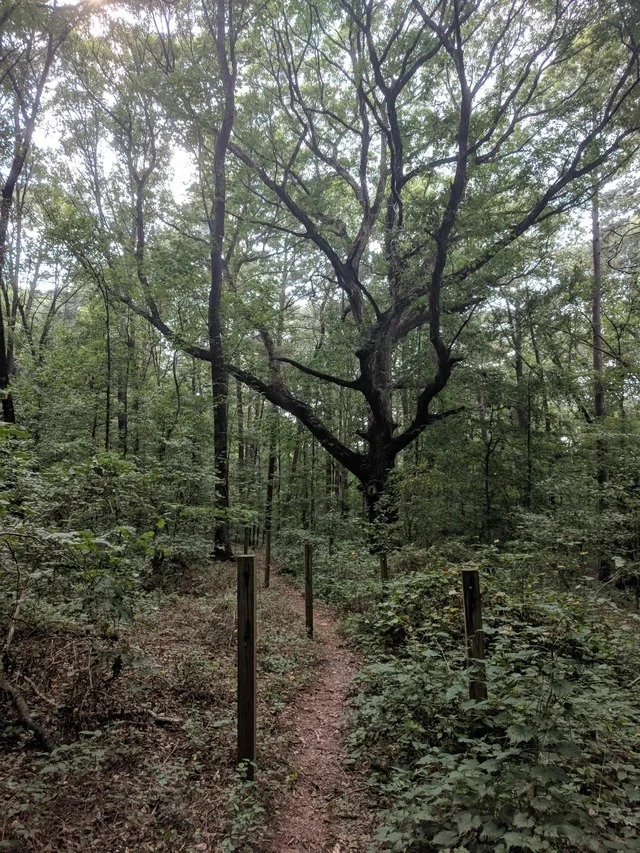
A peaceful wooded preserve offering walking trails and natural green space within the city.
The city’s 1,400 businesses employ approximately 16,000 workers. East Point’s proximity to the airport still heavily influences its existing landscape: the largest share of the city’s working residents are employed in the Transportation and Warehousing industries, the Accommodation & Food Service industry is the largest industry within the city’s limits, and over half of the 30 million square of commercial real estate within East Point is dedicated to industrial/ flex space.
Through a combination of quantitative and qualitative research and feedback from stakeholders, the below targeted industries were determined. These industries will serve as guides for economic development recruitment and retention efforts over the next ten years.
From our community and two business meetings, community and business surveys, and 1-1 stakeholder conversations, the following strengths, weaknesses, opportunities, and threats were highlighted:
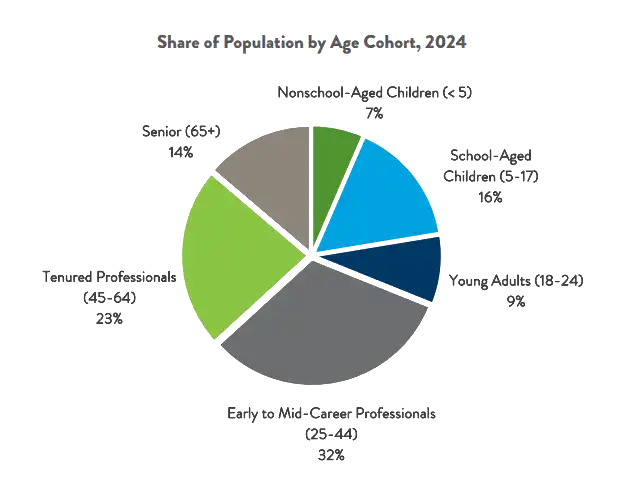
One in three residents are between the ages of 25 to 44 – synonymous with early- to mid-career working professionals and those typically searching for their first homeownership opportunity and expanding their families. Two in five residents over the age of 25 have at least a Bachelor’s Degree.
Residents aged
25 to 4
Residents with
Bachelor’s Degree
One in three residents are between the ages of 25 to 44 – synonymous with early- to mid-career working professionals and those typically searching for their first homeownership opportunity and expanding their families. Two in five residents over the age of 25 have at least a Bachelor’s Degree.
Through a combination of quantitative and qualitative research and feedback from stakeholders, the below targeted industries were determined. These industries will serve as guides for economic development recruitment and retention e”orts over the next ten years.
Almost a third of this diverse community are considered Early to Mid-Career Professionals, or between the ages of 25 and 44. This is similar to trends locally and regionally. Within East Point, this cohort is led by residents who are at the typical age of beginning their professional careers (25-34). However, less than 4 out of every 10 residents 25+ within East Point have at least a 4-year degree or higher. With almost 30% of residents having only a High School diploma or similar as their highest level of educational attainment and another 16% having only attended some college, opportunities exist within the city for further local workforce opportunities.

Almost 4 out of every 10 residents over the age of 24 have a 4-year or advanced degree
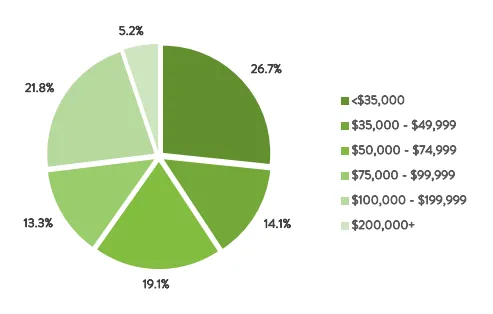
East Point has a median household income of almost $60,000 across its over 16,000 households. As the median, half of East Point households earn less and half earn more. With over a quarter of households within the city earning less than $35,000 annually, the median disposable income, or after-tax household income, is estimated at $49,998.
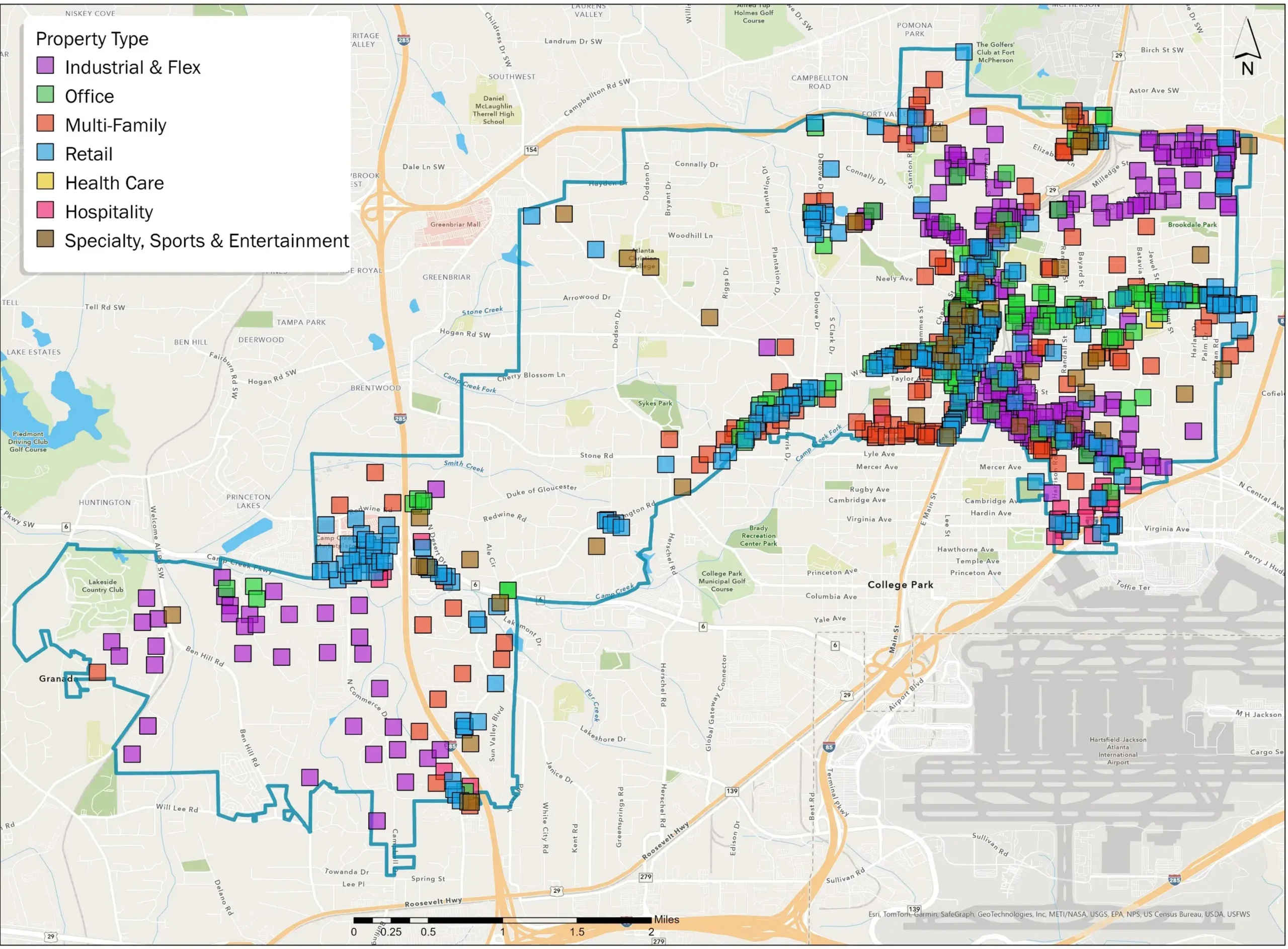
East Point hosts almost 30 million square feet (SF) of commercial real estate. Of that, industrial/ flex space dominates East Point’s commercial real estate inventory. The city has added significantly to its industrial inventory since 2020 and now has over 16 million square feet, almost 10% of countywide inventory. In addition to recent industrial growth, East Point has had a gradual increase in multi-family inventory over the past two decades. Multi-family now makes up about a quarter of East Point’s commercial inventory. Office, retail, and hospitality space each represent less than 10% of all commercial space in the city.
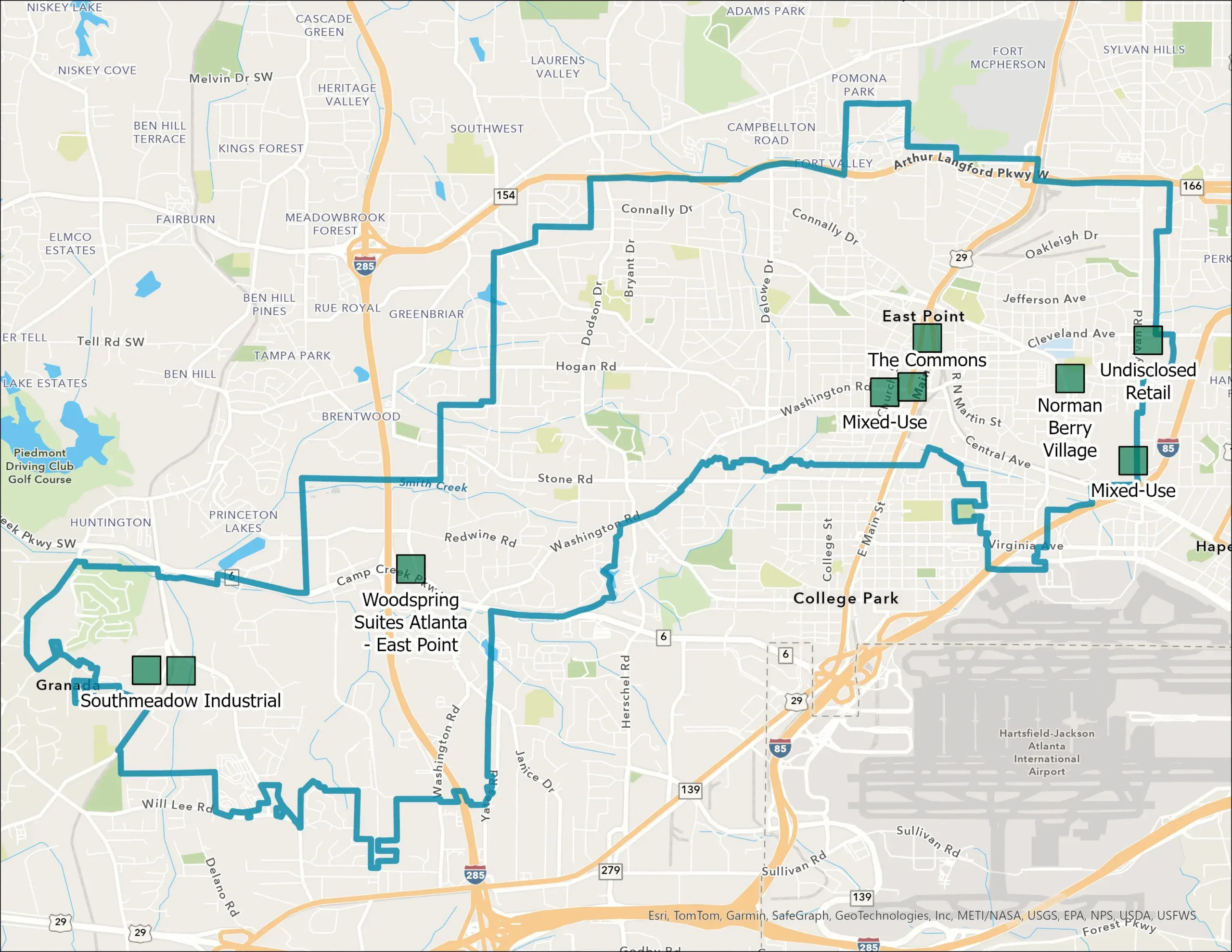
Most of East Point’s commercial real estate is clustered along Highway 29 and its arteries. There are strong concentrations of industrial buildings to the north, along Highway 166, and to the south, along the Willingham Drive corridor. Another heavily industrial area exists in southwest East Point, along I-285 and the Camp Creek corridor. Retail and office predominate downtown, with multi-family mostly concentrated to the south and west along Washington Road or I-285.
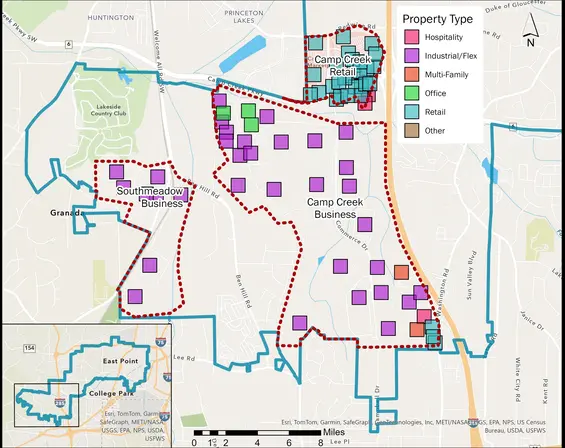
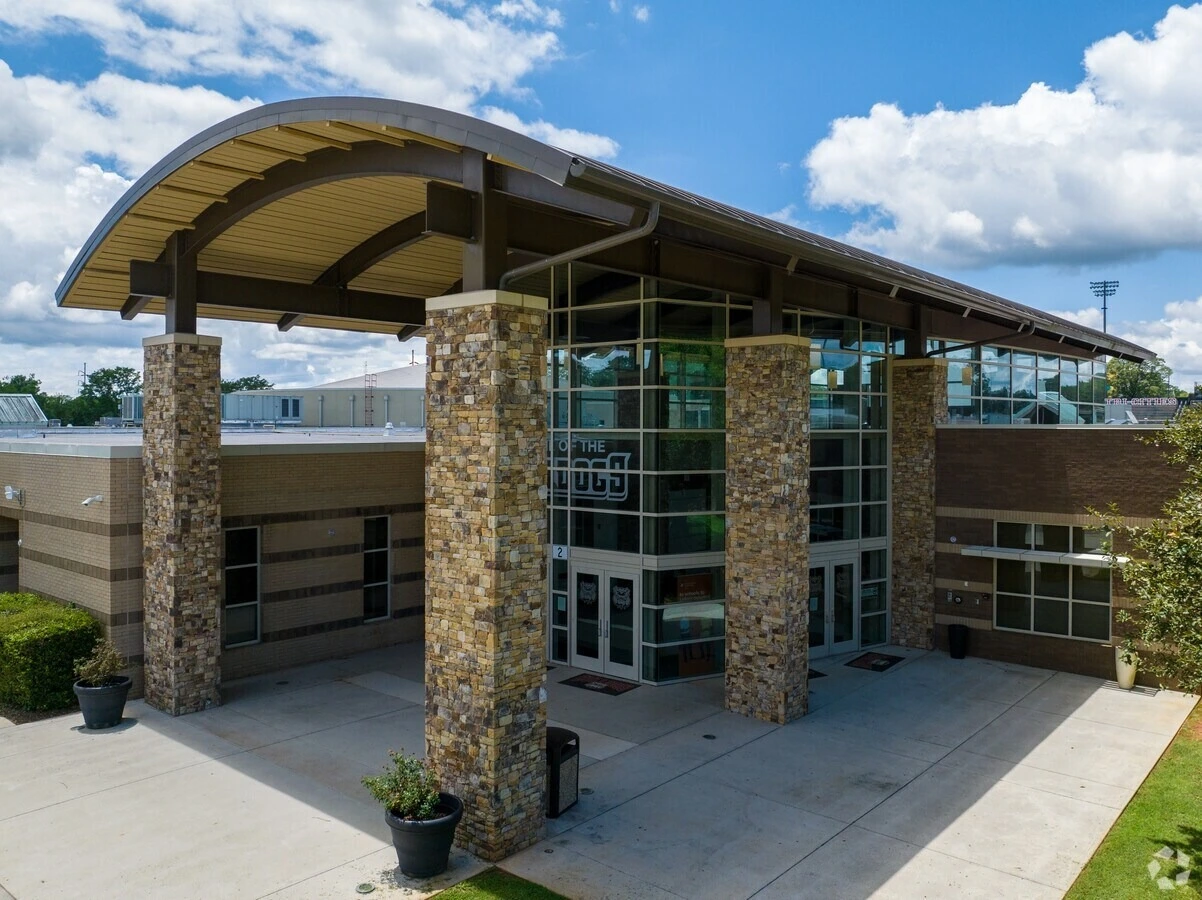
East Point contains multiple nodes where economic activity is concentrated. Southwestern East Point, along Interstate-285 and Camp Creek Parkway, contains three major nodes of industrial and retail space. Outside of distribution and warehouse, South Meadow is also near the Georgia Sports Park and the future Microsoft Data Center Campus. The Camp Creek Business Center Park houses distribution for many national companies such as Home Depot, Duke Realty, Amazon, Piedmont Medical, Kuehne + Nagel, and Dicks Sporting Goods. Across Camp Creek Parkway is Camp Creek Marketplace which serves as the city’s main retail and restaurant hub.
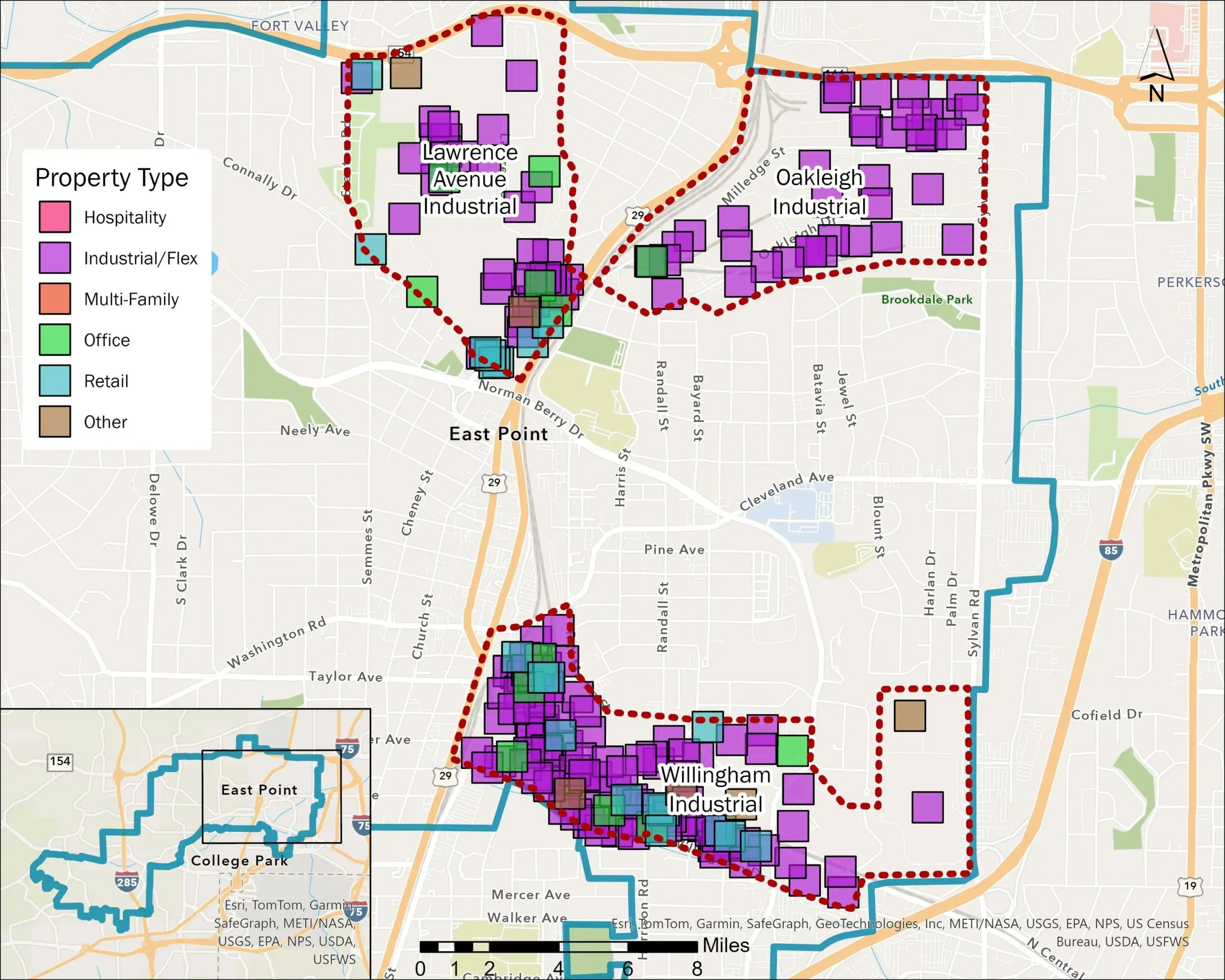
The areas around downtown East Point contain multiple major industrial nodes that also have some mix of space. The Lawrence Avenue and Oakleigh Industrial area is home to a variety of commercial spaces such as the Creekside Distribution Center (anchored by PODS and Walmart), firms that support film production (such as REEL Supplies), Ardens Garden distribution and flex space, The Common Market Southeast fresh food wholesaler, and the Arts XChange. Willingham Industrial has a high concentration of commercial space that includes Atlanta Utility Works, East Point City Annex, and the East Point Housing Authority.